Next step to growing up, realize what to do with the money that you have. You probably have a checking account and a savings account. Let's fix those up.
Checking:
Is your checking account free with no monthly fees and no ATM fees? If yes, skip to the next paragraph. If no, find one. Find A Better Bank is a great resource for finding one. I'm not going to make a recommendation, except that having a debit card connected to your checking account is very convenient!
Savings:
Here's where the important stuff comes in! Your savings account should be growing constantly. (If you have enough money, you can even start investing in a 401(k), but we'll discuss that later.) But you want a savings account with a high interest rate so that you will receive the highest return on your investment. Now a few years back, you could find a bank that would give you 4 or 5% back! Those days are long gone unfortunately, now 0.6% is a good rate. Sad, right? Before I looking into this, I want getting 0.04% back on my savings account. So about 4 cents a month. Now I have an account with 0.75% interest, and I'm making $0.85 a month. Still not great, but it will add up!
Now feel free to do your own research on savings accounts. The highest rate I found was about 0.8%, but it came with questionable customer service. So I went with Capital One 360 (formerly ING Direct), who give me a 0.75% interest rate. I highly recommend them, and if you use this link to sign up, I'll get a bonus and you will too! Even if you don't want to use my link, I recommend this bank. Since it's all online (no physical branches), they can save on overhead and provide you the most bang for your buck. They also have automatic savings plans, where you can have a certain amount of money transferred to your savings account each month; a very wise thing to do!
Don't forget, your checking and savings accounts do NOT have to be at the same bank. You can mix and match to find what best fits you. But the sooner you set this up, the better off you will be. Contact me for any questions and good luck!
Saturday, April 13, 2013


Sunday, March 24, 2013
The Importance of Good Credit
This post is about one thing: building your credit. You may have heard to avoid credit cards in college, as it's easy to spend more than you have and it's never smart to spend more than you earn. If you're the type of person who spends every cent you have access to without discretion, this may be true for you as well, but if so there's a much bigger problem, a lack of self-control (a completely different topic for another time!). Other than that category, I cannot emphasize enough the importance of getting a credit card to build your credit as soon as possible. In this post I will walk you through the process, but first, let's go over the rewards that will come with this credit you will build.

Rewards:
I encourage you to browse the website of the Frugal Travel Guy. On this page you will find how using credit cards can earn you free vacations, free hotel stays, airline flights, and so on. If you're into travelling, this is reason enough alone to begin building your credit. (And you can't do these things until you have some credit built up, so get started now!) If you're not into travel, having good credit will help you with car payments later in life, loans for a house, and maybe even a vacation home. Having great credit will save you money, and the best time to start is now! Steps are below.
Step 1: Find a Credit Card
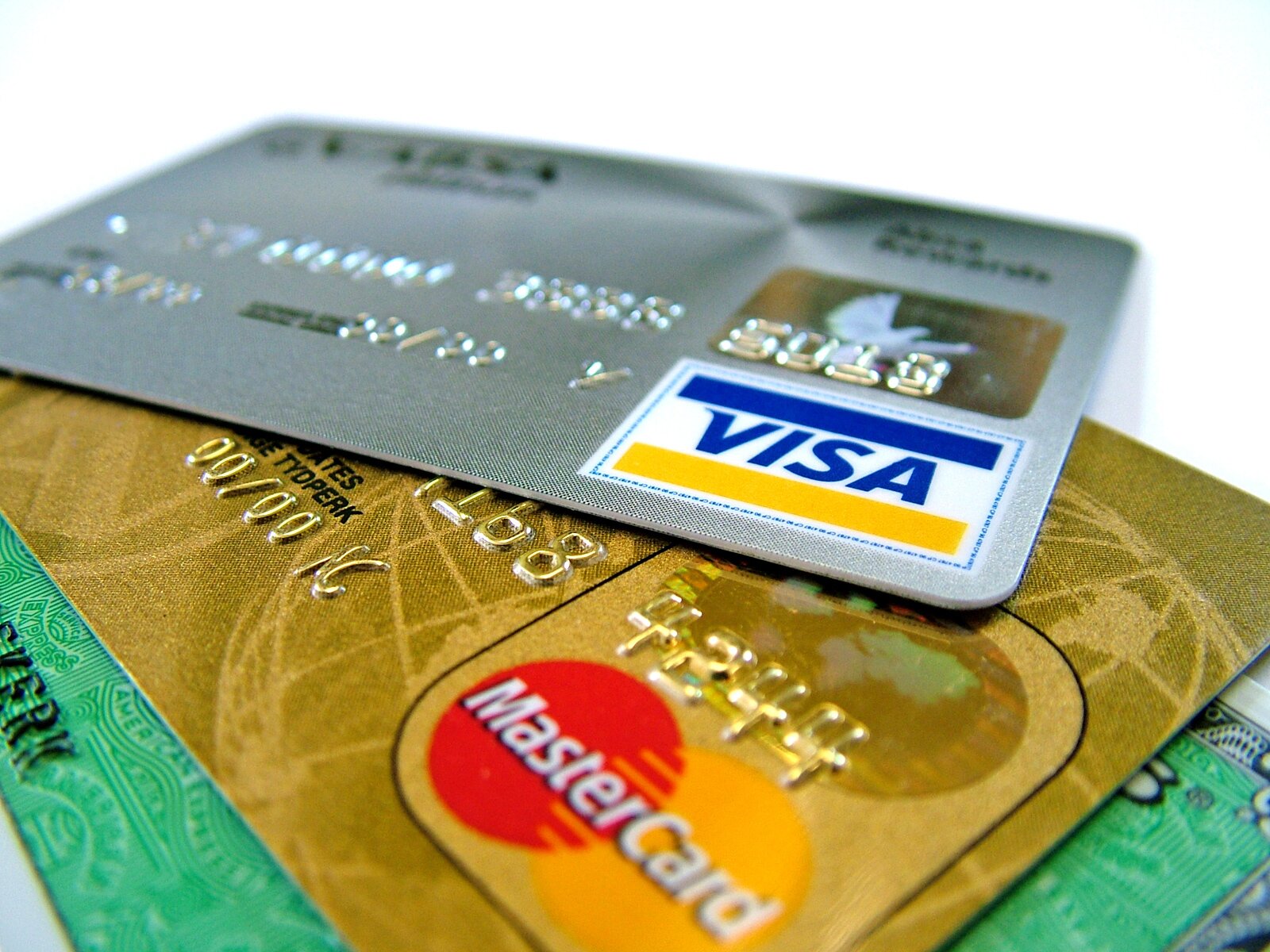
You're probably getting tons of credit card offers in the mail from banks and stores who each offer their own loyalty cards and other places like that. But you need to do a little research before selecting your first credit card. Here are some qualifications you need to look for:
Rewards:
I encourage you to browse the website of the Frugal Travel Guy. On this page you will find how using credit cards can earn you free vacations, free hotel stays, airline flights, and so on. If you're into travelling, this is reason enough alone to begin building your credit. (And you can't do these things until you have some credit built up, so get started now!) If you're not into travel, having good credit will help you with car payments later in life, loans for a house, and maybe even a vacation home. Having great credit will save you money, and the best time to start is now! Steps are below.
Step 1: Find a Credit Card
You're probably getting tons of credit card offers in the mail from banks and stores who each offer their own loyalty cards and other places like that. But you need to do a little research before selecting your first credit card. Here are some qualifications you need to look for:
- Mastercard or Visa. Go with one of the big two for your first card. Yes, Discover and American Express are also pretty big, but sometimes there are places where they're not accepted, etc. I recommend MC or Visa.
- Make sure it has no annual fee. They'll try to trick you. "First year free!" they'll say. Guess what that means? Yep, you'll pay after that year. You say you'll close it after a year? Think again. Sure, you could close it, but as your oldest credit card, you'll want to keep that one open as long as possible (years).
- Avoid introductory APR's. The APR, or annual percentage rate, is how much you'll be charged for not making payments on time and in full, every time. If you always make your payments, this won't even matter. But a company that offers a 4-month 0% APR is out to trick you and is likely less trustworthy. That and the APR increases to 28% when those four months are over. But hopefully you'll be paying everything off so the APR won't matter, even if it is high.
- Automatic bill payment is a big plus, but not essential.
- Don't worry about rewards cards for your first card. You're interested in building credit.
My first card was a Capital One credit card, but you need to do your own research and find one that suits your needs. You can use sites like Credit Card Menu to try to find them, but don't forget to read the fine print!
Step 2: Start Charging and Paying
If this is your first card, you'll probably start with about a $500 credit limit. Don't go charging $500 right off the bat. It's actually best if you use no more than 30% of your available credit at any time, which for $500, is $150. Make sure to charge something to it every month, even if it's only $10. Also, PAY OFF YOUR CARD IN FULL EVERY MONTH. When you login to the site to see how much you owe, it will looks something like this:
Balance: $145.67
Minimum Payment: $25.00
Amount Due: $42.67
Credit Available: $354.33
Whoa! Why are there so many numbers? Which one do I pay? Let's go over what they mean.
Balance is the total amount that is owed on the card. In this case, you have $145.67 right now that you will eventually have to pay back.
Minimum payment is the minimum that is due this month. DO NOT pay this amount, as your credit score will go down. This is what the credit card companies want you to pay because this is how they get more of your money.
Amount due is how much of your balance is due this month. In this scenario, you have $42.67 that is due right now, which means the remainder of your balance will be on next month's bill.
Credit available is how much more credit you have. Your Credit Available plus your Balance will equal your credit limit. Remember to only spend 30% of your credit limit.
When you pay each month, always pay off at least the Amount due, if not the entire balance. I like to pay the entire balance every time, as it's easy to forget how much money you owe. But as long as you pay at least the amount due every month, you're on your way to building credit!
Step 3: Set Up Automatic Payments (optional)
If your bank that sponsors the card offers automatic payments, hook it up with your checking or savings account (don't have those? Wait for a future post!), and set it to pay off your amount due in full every month (most automatic payments will not pay the balance, only the amount due).
Step 4: Sign up for Credit Karma
Credit Karma is a website that monitors your credit score and shows you how you're doing. It also breaks down how your score is obtained so you can see if you do everything right. There's even an app for your phone so that you can check your credit score at any time. I highly recommend it.
Anyhow, you should now have enough information to apply for your first credit card. In about a year you can get a second one, but for now stick with what you have. Credit is a valuable tool, so be sure to pay your balance!
Friday, March 22, 2013
Is the Cheapest Gas Really the Best Value?
This blog is for me to share with you all that I have learned about adulthood, saving money, discounts, and all kinds of things like that so that you don't have to struggle to learn it yourself!
I caught myself today wondering whether buying gas from ARCO every time is really the best value. I spend $0.35 every time on the debit card transaction fee, so am I really saving any money over using another gas station that's almost as cheap? Well, let's find out!
Gas Quality:
First of all, does ARCO have low quality gas as some presume? Will Chevron gas really last that many more miles? What about higher octanes? Are they really better for your car?
OK, to clear up a common myth: All gasoline comes from the same place. There isn't an ARCO and a Chevron and a 76 gasoline extraction site in the Middle East, etc. All the gas is the same. Different stations add different detergents to the gas. Yes, detergent. The EPA requires that every gasoline has detergent in it, so no matter where you go, you're getting the same gas with different detergent. So stop worrying about the different stations. It's all the same gas.
Second, the octanes are only important if your car needs a higher octane. You should know if it does, and if not it's in your manual. If you don't need a higher octane, you're just wasting your money. To sum up what's going on in layman's terms, cars that can have higher horsepower, aka nice cars, typically have a higher compression ratio. This means they will need higher octane gasoline, which can be compressed more before causing "knocking," which damages your engine and is not good for your car. If your car is a 2000 Chevrolet Malibu like mine (her name is Gilly!), you definitely don't need to shell out for the higher octane gas.

Price and Savings:
So I'm looking at current gas prices right now, and ARCO is currently $3.89. Right across the street is Mobil at $4.03, and there's a Chevron down the street at $3.99. Now I'm going to assume that these price variations remain about the same for these calculations, with ARCO being the base price, Chevron being +10, and Mobil being +14.
After averaging out the last few times I have bought gas, (all at ARCO), I come out with the average spendings of $33.19 each time I go to the pump. Without the $0.35 fee, this comes to $32.84. Assuming the current price of gas has been the average of the last few weeks, I come to the conclusion that I usually buy 8.44 gallons of gas each time. I have a ten gallon tank, this makes sense. If you have a 20 gallon tank, you may need to do your own calculations. Dividing the $0.35 cent fee by that many gallons comes to about $0.05 cents per gallon extra for the debit card fee, bringing ARCO up to a price of $3.94. So it seems that ARCO is still the cheapest.
But wait! There's more! I have a rewards credit card that gives me 2% back on all gasoline purchases. So by using my debit card, I am essentially losing that money by not using my credit card. Considering my average purchase of $33.19 on gas, I would earn $0.66 back each time I went to the pump. Not a ton, but subtracting that $0.66 from the price of buying the same amount from the next cheapest gas station, Chevron comes out to a per gallon price of $3.91. Guess what? That's cheaper than the $3.94 I am spending on ARCO! Turns out, if you have a rewards credit card like me, the cheapest gas is not always the best deal.
I caught myself today wondering whether buying gas from ARCO every time is really the best value. I spend $0.35 every time on the debit card transaction fee, so am I really saving any money over using another gas station that's almost as cheap? Well, let's find out!
Gas Quality:
First of all, does ARCO have low quality gas as some presume? Will Chevron gas really last that many more miles? What about higher octanes? Are they really better for your car?
OK, to clear up a common myth: All gasoline comes from the same place. There isn't an ARCO and a Chevron and a 76 gasoline extraction site in the Middle East, etc. All the gas is the same. Different stations add different detergents to the gas. Yes, detergent. The EPA requires that every gasoline has detergent in it, so no matter where you go, you're getting the same gas with different detergent. So stop worrying about the different stations. It's all the same gas.
Second, the octanes are only important if your car needs a higher octane. You should know if it does, and if not it's in your manual. If you don't need a higher octane, you're just wasting your money. To sum up what's going on in layman's terms, cars that can have higher horsepower, aka nice cars, typically have a higher compression ratio. This means they will need higher octane gasoline, which can be compressed more before causing "knocking," which damages your engine and is not good for your car. If your car is a 2000 Chevrolet Malibu like mine (her name is Gilly!), you definitely don't need to shell out for the higher octane gas.
Price and Savings:
So I'm looking at current gas prices right now, and ARCO is currently $3.89. Right across the street is Mobil at $4.03, and there's a Chevron down the street at $3.99. Now I'm going to assume that these price variations remain about the same for these calculations, with ARCO being the base price, Chevron being +10, and Mobil being +14.
After averaging out the last few times I have bought gas, (all at ARCO), I come out with the average spendings of $33.19 each time I go to the pump. Without the $0.35 fee, this comes to $32.84. Assuming the current price of gas has been the average of the last few weeks, I come to the conclusion that I usually buy 8.44 gallons of gas each time. I have a ten gallon tank, this makes sense. If you have a 20 gallon tank, you may need to do your own calculations. Dividing the $0.35 cent fee by that many gallons comes to about $0.05 cents per gallon extra for the debit card fee, bringing ARCO up to a price of $3.94. So it seems that ARCO is still the cheapest.
But wait! There's more! I have a rewards credit card that gives me 2% back on all gasoline purchases. So by using my debit card, I am essentially losing that money by not using my credit card. Considering my average purchase of $33.19 on gas, I would earn $0.66 back each time I went to the pump. Not a ton, but subtracting that $0.66 from the price of buying the same amount from the next cheapest gas station, Chevron comes out to a per gallon price of $3.91. Guess what? That's cheaper than the $3.94 I am spending on ARCO! Turns out, if you have a rewards credit card like me, the cheapest gas is not always the best deal.
Subscribe to:
Posts (Atom)